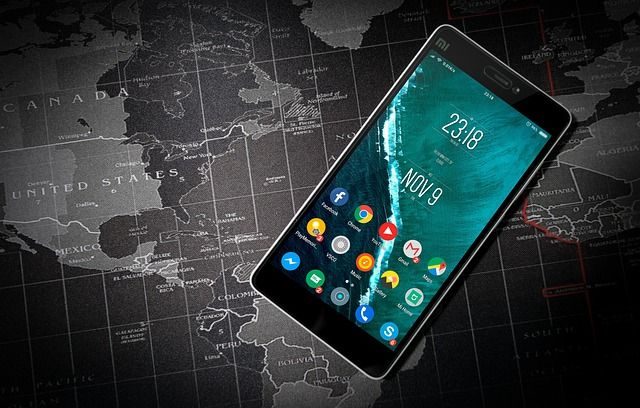
Bealls is moving its customer relationship into a channel it fully controls. The regional department store chain is preparing to launch its first mobile application, paired with a marketing campaign aimed at loyalty members and seasonal shoppers, according to reporting on the retailer's plans. For a chain whose traffic has historically arrived through mall footfall and circulars, an owned app changes where the customer relationship actually lives, and it changes what data the retailer can see about a store visit.
Key Conclusions
The strategic logic is straightforward. Retailers that depend on third-party marketplaces rent their customer relationships, and the rent keeps rising. An owned app converts an anonymous transaction into an identified customer, which then makes it possible to measure visit frequency, basket composition and reactivation over time. Reporting on the launch notes Bealls is debuting a mobile app with a campaign built around loyalty members and seasonal shoppers, which suggests the retailer is treating the app as a retention instrument rather than a pure shopping channel.
The timing matters as much as the decision. Holiday demand is being planned against a cost-conscious consumer. Survey work this season shows shoppers worried about affording the holidays, and separate reporting shows Halloween budgets being trimmed, with candy among the first categories cut. When customers are actively reprioritising, an owned channel becomes the fastest way to signal value and to measure which signals actually change behaviour.
Why an Owned App Changes the Economics
From Footfall to Identified Visits
Mall traffic is a shared resource. When a customer walks into a Bealls store, the retailer knows a visit happened but often cannot connect that visit to a person, a history or a future intent unless the shopper is already in the loyalty file. An app closes that gap by making check-in, coupon redemption and purchase history attributable to one profile. The practical consequence is that the retailer can finally answer questions such as how many loyalty members visited in a month, how many returned within 30 days, and which categories pull members back. Those answers determine where marketing spend should go.
Experiential Retail as the Differentiator
Regional chains cannot outspend national players on price, so the more durable advantage is the store experience itself. Reporting on Scheels and its experiential stores shows how attractions and deep assortment drive dwell time and repeat visits. An app amplifies that model by turning in-store events into trackable campaigns: the retailer promotes the event in-app, captures attendance, and then measures whether attendance converted into a purchase on the same day or later in the week.
Best Practices
Design the App Around Tasks, Not Catalogues
The most common failure mode for a first app is that it becomes a searchable catalogue. That role is already served by the mobile web and by marketplaces. A store-centric app should instead be organised around tasks: find the nearest store with the item in stock, check a loyalty balance, redeem a personalised offer, schedule a pickup, or register for an event. Retailers that rebuilt employee-facing tools around task execution, as Target did with its store operations app, found that narrower scopes drive higher completion rates. The same principle applies to the customer side.
Measure Incrementality, Not Installs
Install counts flatter a launch without proving anything. The metrics that matter are incremental visit frequency among members who adopted the app, incremental basket size, and reactivation of lapsed shoppers. A workable approach is to hold back a matched cohort of loyalty members who do not receive app prompts, then compare visit and spend behaviour over a full quarter. Reporting on Gen Z and Gen Alpha holiday behaviour shows that younger cohorts plan spending around app-native discovery and drops, so the cohort split should be cut by age as well as by tenure.
Common Mistakes
The first mistake is treating the app as a discount pipe. If every notification carries a price promotion, members learn to wait for the next one and full-price conversion erodes. Offers should be sequenced so that at least part of the value comes from access, service and convenience rather than price alone.
The second mistake is launching without store-level readiness. If staff cannot see app offers at the point of sale, or if pickup orders are not staged correctly, the app creates friction instead of removing it. Operational readiness has to be verified store by store before the campaign goes wide, not after the first wave of complaints.
Data View: What a First App Usually Reveals
Retailers launching a first app typically discover three things in the first ninety days. The first is that a large share of loyalty members are dormant by the retailer's own definition, often having no recorded transaction in more than a year. The second is that visit frequency is far more concentrated than expected, with a small share of members accounting for a disproportionate share of trips. The third is that the categories driving repeat visits are not the categories driving margin, which forces a deliberate trade-off between traffic and profitability.
Those findings change planning assumptions. Seasonal pressure makes the trade-off sharper: toy prices rose roughly 4.2% year over year ahead of the holidays, as reported in coverage of holiday toy pricing, while shoppers describe themselves as more value-driven than a year ago. An app gives the retailer a lever to shift demand toward higher-margin adjacent categories rather than competing purely on the headline price of the gift item.
Summary
Bealls' first mobile app is best understood as a shift in where the customer relationship is held. By moving loyalty, offers and store events into an owned channel, a regional chain converts anonymous footfall into identifiable visits it can measure and act on.
The execution priorities are narrow scope, task-based design, store-level readiness and incrementality measurement. Install counts are not the goal; incremental visits and reactivation among lapsed members are.The launch should also be judged on store-level execution quality rather than campaign reach, because a promise the store cannot keep costs more than the installs it generates.
Data Sources
- Retail Dive: Bealls to debut mobile app
- Retail Dive: Shoppers worried about affording holidays
- Retail Dive: Gen Z, Gen Alpha holiday shopping trends
- Retail Dive: Inside Scheels' sporting goods wonderland
- Retail Dive: Target upgrades store operations app
- Retail Dive: Toy prices jump ahead of holiday season
FAQ
Why does a regional retailer need its own app?
A: It converts anonymous store footfall into identifiable visits, giving the retailer first-party data on frequency, basket composition and reactivation that marketplaces do not share.
What should a first app prioritise?
A: Tasks rather than a catalogue: stock checks, loyalty balances, personalised offers, pickup scheduling and event registration.
Which metrics prove the app is working?
A: Incremental visit frequency, incremental basket size and reactivation of lapsed members, measured against a matched holdout cohort.
Why is a discount-only app risky?
A: Members learn to wait for the next promotion, which erodes full-price conversion and trains the base to be price-led.
What does store readiness mean in practice?
A: Staff can see app offers at the point of sale, pickup orders are staged correctly, and inventory accuracy supports the stock promises the app makes.
How should cohorts be split for measurement?
A: By loyalty tenure and by age group, since younger shoppers plan spend around app-native discovery and drops.