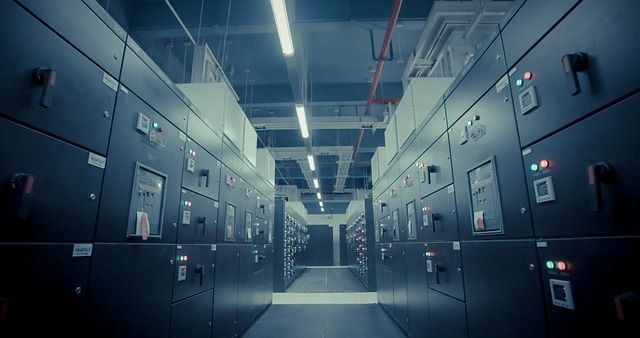
A cyberattack on French supermarket operations reached beyond payment systems and into store-level refrigeration controls, causing cabinets to overheat and in several cases catch fire, according to a CNBC report published on October 13. The detail matters more than the breach itself. For two decades, retail cyber risk has been modeled around customer data and checkout terminals, while the equipment that keeps perishable inventory safe sat on a separate, largely unmonitored network. That separation is now the weak point.
Key Conclusions
Store-level control systems were designed for uptime, not for adversarial conditions. Temperature controllers, building management platforms and energy monitoring tools were installed by facilities teams and rarely appear in the security architecture reviewed by the chief information security officer. When an attacker reaches that layer, the consequence is not a data loss headline but spoiled inventory, damaged equipment and, in the French case, physical fire risk.
The financial exposure is also different from a payment breach. A card data incident triggers notification costs and remediation. A refrigeration failure triggers shrink, emergency logistics, regulatory scrutiny over food safety and, potentially, closure of selling space during the highest-traffic weeks of the year. Those costs land on the operations budget, which is why the response is usually coordinated by the wrong team.
Why refrigeration is an attractive target
Refrigeration accounts for a large share of a supermarket's electricity consumption, so the control layer is deliberately networked to allow remote setpoints and demand response. That same remote access is what an attacker needs. Once inside, changing a setpoint by a few degrees is enough to compromise chilled and frozen categories within hours, and the damage continues silently until a store associate notices condensation or an alarm that may itself have been disabled.
Inside the response: the first six hours
The first six hours after detection determine the size of the loss. Operators need to establish whether the issue is a controller fault or an intrusion, isolate the affected network segment, verify temperatures physically rather than through the same compromised dashboard, and decide which categories to move to backup cold storage. Each of those steps requires a decision-maker who understands both facilities and security, a role most retailers do not formally staff.
In practice, the sequence usually breaks at the second step. Isolating the network segment takes down the monitoring that the store relies on, so teams hesitate. The result is a delay measured in hours, during which temperature excursions continue. Retailers that have rehearsed the trade-off tend to isolate first and verify manually, accepting a short period of blindness in exchange for stopping the spread.
Manual verification is not a fallback, it is the control
Every automated temperature log depends on the same infrastructure an attacker may control. Keeping calibrated handheld thermometers and a paper log in each store is unglamorous, but it is the only measurement that survives a compromised network. Stores that maintain this habit can document actual product condition, which matters both for food safety records and for insurance claims filed after the event.
Best Practices
The first practical step is to inventory every networked device in the store, including controllers installed by vendors and never registered with IT. Most retail estates discover between twenty and forty percent more connected devices than their asset register shows once a physical walkthrough is completed. You cannot segment what you have not counted.
The second step is to place facilities controls on a separate network segment with no direct route to payment or customer data systems, and to require vendor access through a brokered gateway rather than a shared password. This does not eliminate the risk, but it converts a single intrusion into two separate problems for an attacker, which changes the economics of the attack.
Contract terms decide who responds at 2 a.m.
Refrigeration and building management systems are usually maintained under service contracts that specify response times for equipment failure, not for security incidents. Adding a security clause with a defined escalation path, a named contact and a requirement to preserve logs changes the practical outcome more than any technical control. Retailers that renegotiate this clause before an incident avoid the most common failure mode, which is a vendor and an internal team each waiting for the other to act.
Common Mistakes
The most common mistake is treating store technology as facilities equipment rather than as part of the attack surface. That framing decides budget, ownership and reporting lines, and it is why refrigeration controllers rarely appear in security reviews. Reclassifying them is a governance change, not a technology purchase, and it costs nothing but attention.
The second mistake is assuming that because the attack targeted a European grocer, the exposure is regional. The underlying pattern, remote setpoints and vendor access on flat networks, is present in most markets. The French case is a preview rather than an outlier, and the operators who treat it as a local story will meet the same problem on their own timeline.
Do not measure readiness by uptime alone
Facilities teams are measured on uptime, so a control system that stays online looks healthy. Security posture is a different question: how many devices share credentials, how many vendors hold standing access, how quickly a setpoint change can be traced to an individual. None of these appear in an uptime report, and all of them determine what happens when someone with hostile intent reaches the same interface.
Outlook: physical and digital risk converge
The French incident is part of a broader convergence. Stores now contain cameras, shelf sensors, electronic shelf labels, self-checkout terminals and energy controls, all networked and often installed by different vendors on different schedules. Each addition improves operational visibility and enlarges the surface that must be defended. The security model that worked when a store had one router and one POS lane no longer describes reality.
For operators, the implication is that resilience planning has to include physical consequences of digital failures. That means cold chain contingency, manual measurement capability and a clear authority to close a department when conditions cannot be verified. Those are operational commitments, and they belong in the same plan as the technical controls rather than in a separate business continuity document nobody reads.
Summary
A cyberattack on French supermarket operations reached store-level refrigeration controls, causing overheating and fires. The case shows that retail cyber risk extends well beyond payment systems into equipment that facilities teams manage and security teams rarely review.The exposure is operational rather than informational, and it is measured in spoiled inventory rather than in records.
The practical response has three parts: count every networked device, segment facilities controls away from payment and customer data, and rewrite vendor contracts so that security incidents have a defined escalation path. Manual temperature verification remains the only measurement that survives a compromised network.None of the three requires new capital expenditure, which is why the barrier is attention rather than budget.
Data Sources
1. CNBC: French supermarket hack caused fridges to catch fire
2. CNBC: Barclays on haircare and self-care trade-down
3. CNBC: Constellation Brands cuts outlook as beer demand softens
4. CNBC: Levi Strauss third-quarter results
FAQ
Why would an attacker target refrigeration instead of payment data?
A: Because the operational damage is immediate and expensive. Spoiled inventory, equipment damage and forced closures cost more per hour than most card data incidents.
What is the first action after a suspected intrusion?
A: Isolate the affected network segment and verify temperatures physically, accepting temporary loss of monitoring rather than allowing the incident to spread.
How many connected devices do retailers typically miss?
A: Physical walkthroughs commonly find twenty to forty percent more networked devices than the asset register lists, mostly vendor-installed controllers.
Do service contracts cover security incidents?
A: Usually not. They specify response times for equipment failure, so a security clause with an escalation path must be negotiated separately.
Is manual temperature logging still necessary?
A: Yes. Automated logs depend on the same infrastructure an attacker may control, and manual records support both food safety documentation and insurance claims.
Is this risk limited to European grocers?
A: No. Remote setpoints and vendor access on flat networks are common across markets, so the pattern is replicable anywhere.
References
1. CNBC: French supermarket cyberattack report