Target is betting on daily deals and a digital assistant to court budget-conscious shoppers this holiday season, offering more than 8,000 new gifts with more than half exclusive to the chain. Most new items sit at $20 or under, with many under $5, and the retailer is rolling out an AI-powered assistant called Ask Target on its website and app. The assortment math and the assistant are two halves of the same argument: traffic is no longer the scarce resource, conversion is.
The Price Architecture Behind 8,000 New Gifts
Chief executive Michael Fiddelke framed the strategy around value, quality and affordability, describing it as luxe for less during a media briefing on Oct. 20. The chain is offering a $35 throw blanket, a $45 cashmere sweater, $10 pajamas and $5 candles, with a new set of daily deals running from Nov. 1 to Dec. 2. Target CEO Michael Fiddelke described the holiday value strategy on Oct. 20
What looks like a promotional calendar is actually a price architecture. By anchoring a wide assortment at $5, $10 and $20 price points, the retailer gives shoppers a reason to enter the store or app repeatedly rather than once, and each entry is a chance to trade up. Owned brands carry much of the load, spanning apparel, home and beauty, which protects margin at those low entry prices.
What Ask Target Is Actually Doing
An assistant embedded in the shopping flow solves a specific problem: the gap between arriving with a vague intent and finding a specific item. Holiday shoppers frequently arrive knowing a recipient and a budget but not a product, and that gap is where baskets stall. A conversational layer shortens the search without requiring the shopper to learn the taxonomy of the catalogue. Target is rolling out an AI-powered assistant called Ask Target
The strategic value is not the conversation itself but the intent data it produces. Every question reveals a constraint the retailer can act on: budget ceilings, gifting occasions, category preferences. That data compounds across a season in a way that a banner impression never does, and it can be fed back into assortment and search ranking within weeks.
Three Numbers That Set the Ceiling
56% say the economy will change their plans
More than half of holiday shoppers say the state of the economy will affect their holiday spending plans this year. Among those consumers, 43% plan to shop for sales more often, 31% will comparison shop online more frequently, and 29% will make other adjustments to how they buy. 56% of holiday shoppers say the economy will affect their plans
4.2% growth to a record $1.013 trillion
Forecasts put U.S. holiday retail sales for November and December growing 4.2% year over year to a record $1.013 trillion, though part of that growth may stem from higher prices rather than additional units. Growth in dollars and growth in volume are diverging, and the gap is where promotional intensity gets decided.
Half the assortment is exclusive
More than half of the 8,000 new gifts are exclusive to the chain. Exclusivity is the one lever that makes price comparison harder, and in a season where 31% of constrained shoppers plan to compare more often, removing the comparison is worth more than cutting the price again.
Where the Margin Actually Comes From
Low entry prices and exclusive items pull in different directions. Entry prices drive traffic but compress margin, while exclusives protect margin but require design and sourcing lead time that cannot be added in October. The balance is struck through owned brands, which let the retailer set both the cost and the shelf price without negotiating against a national brand's promotional calendar. Kohls is leaning into clearer pricing and gift bundles for the holidays
The risk is that the value message becomes the only message. When a retailer trains shoppers to wait for the daily deal, full-price sales in the surrounding weeks weaken, and the promotional calendar becomes a permanent cost rather than a seasonal one. The daily cadence from Nov. 1 to Dec. 2 is long enough that this effect is worth measuring rather than assuming.
How to Tell Whether It Worked
Three indicators matter more than top-line sales. The first is repeat visit frequency within the promotional window, since the daily deal structure only pays off if shoppers return. The second is attachment rate on entry-price items, meaning how often a $5 purchase is accompanied by a full-margin item. The third is assistant-assisted conversion, which separates shoppers who found what they wanted from those who simply left.
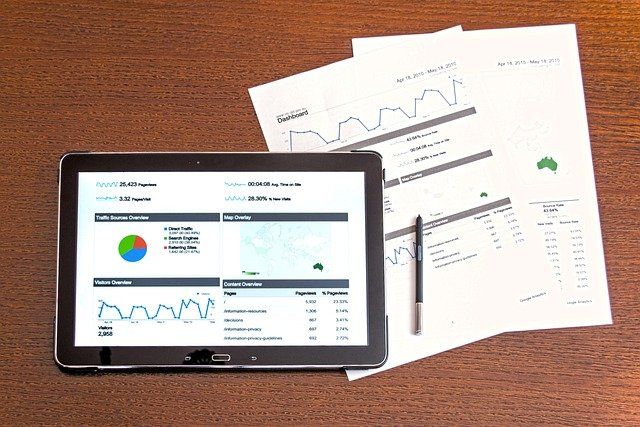
None of these are visible in a standard sales report. They require joining traffic, basket and conversation data on a single timeline, and reading them before the season closes rather than after. Retail analytics teams that only review holiday performance in January are measuring history, not steering the quarter. Albertsons, which is accelerating turnaround efforts, is a useful reminder that most of the work that decides a quarter happens below the sales line. Albertsons is accelerating turnaround efforts amid an identity crisis